










China's first-half economic performance signals stronger momentum, higher-quality growth
GoChina
2026.07.24 15:47:34 字號:
字號:
In the first half of 2026, China's GDP grew by 4.7 percent year-on-year. Summer grain output exceeded 150 million tonnes for the first time, while total imports and exports surpassed 25 trillion yuan ($3.69 trillion) -- also a record for the period.
Despite mounting external uncertainties, the Chinese economy has maintained overall stability and continued its shift toward more innovation-driven and higher-quality growth, demonstrating remarkable resilience and vitality.
Global economic growth has slowed broadly this year. The International Monetary Fund (IMF) recently revised its 2026 global growth forecast down to 3.0 percent, while raising its forecast for China's full-year economic growth by 0.2 percentage points.
Why has China continued to stand out in a challenging global environment? The answer can be summed up in four key words: stability, innovation, vitality, and integration.
Stability: Providing certainty in an uncertain global economy
In the first five months of this year, China exported 187 high-value-added liquid cargo vessels worth more than 64.3 billion yuan, an increase of 188.8 percent year on year.
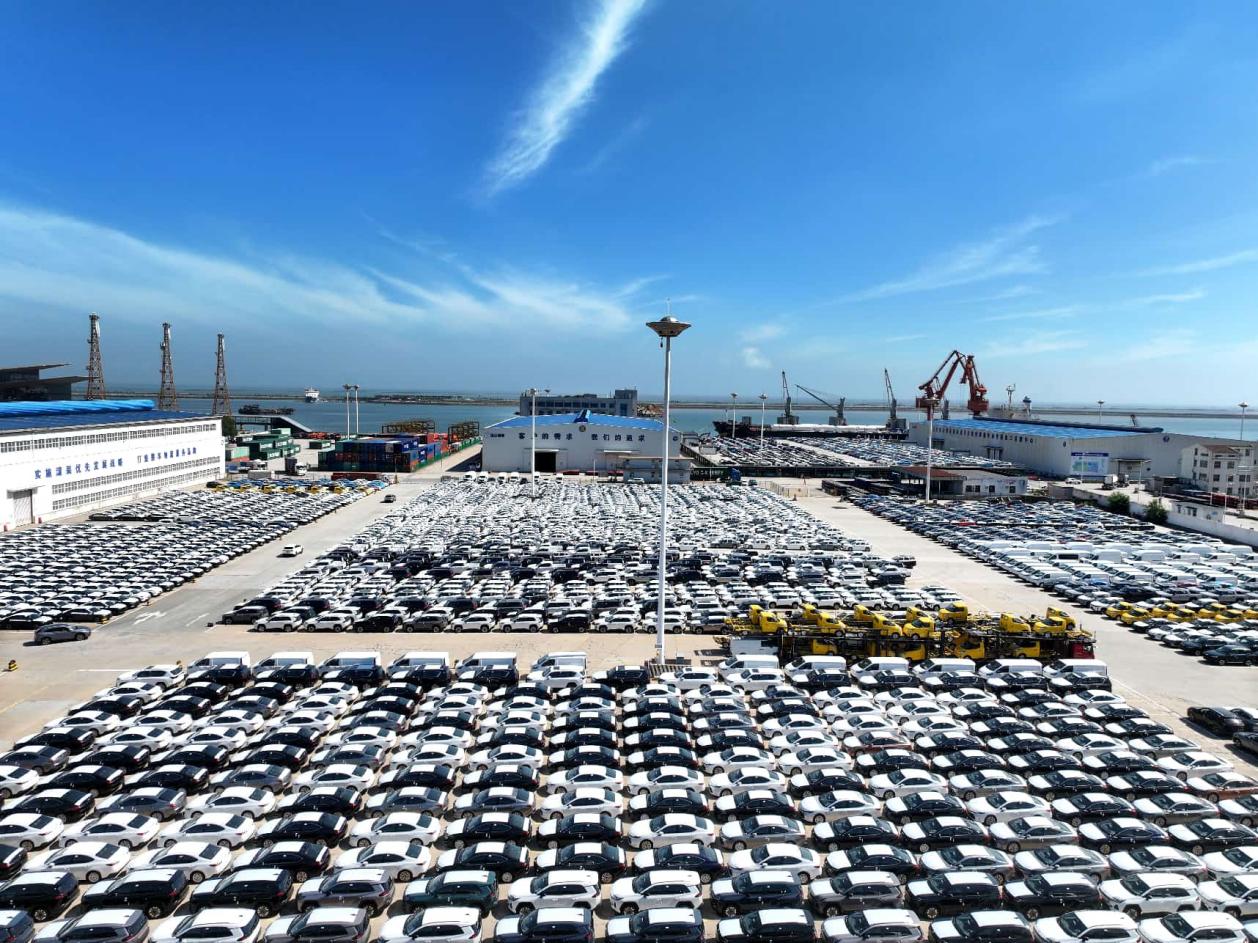
During the first half of the year, China's automobile exports surpassed 5 million units for the first time, with exports of electric vehicles soaring 68.7 percent.
The strong global performance of Chinese-built ships and automobiles reflects the resilience and competitiveness of the broader Chinese economy.
China's economic expansion in the first half of 2026 was the largest for the same period in the past five years. From the rapid growth of integrated circuit exports to the expanding digital trade network of small commodities in Yiwu, Zhejiang province, China's ability to respond quickly to shifting demand, compete in high-end industries, and expand into emerging markets is underpinned by its complete industrial system.
Some economic indicators have experienced short-term fluctuations, reflecting both external challenges and domestic structural adjustments. But such fluctuations do not change the long-term trajectory of China's economic development.
Innovation: Building new engines of growth
Two recent breakthroughs illustrate this momentum.
The victory of Chongqing-based motorcycle maker ZXMOTO in an international superbike championship ended the long-standing dominance of European and Japanese brands, highlighting not only the transformation of Chongqing's motorcycle supply chain but also the upgrading of China's traditional manufacturing industries.
The introduction of the "Tau Law" by Chinese tech giant Huawei, which advocates "time scaling" instead of conventional geometric scaling in chip design, has also drawn widespread attention. The company has now brought 381 chip models into mass production, underscoring the rapid development of China's emerging industries.
This year has also witnessed major scientific and technological breakthroughs. China's supercomputer LineShine became the world's fastest supercomputer, while the Long March-10B carrier rocket achieved the world's first offshore recovery using a sea-based net system.
As technological innovation continues to drive industrial upgrading, new quality productive forces are taking shape at a faster pace.
Preliminary estimates indicate that new growth drivers, including high-end manufacturing, the digital economy, and modern services, contributed more than 40 percent to China's economic growth in the first half of the year, highlighting the economy's increasingly innovation-driven and high-quality development.
Vitality: Unlocking new opportunities through a vast market
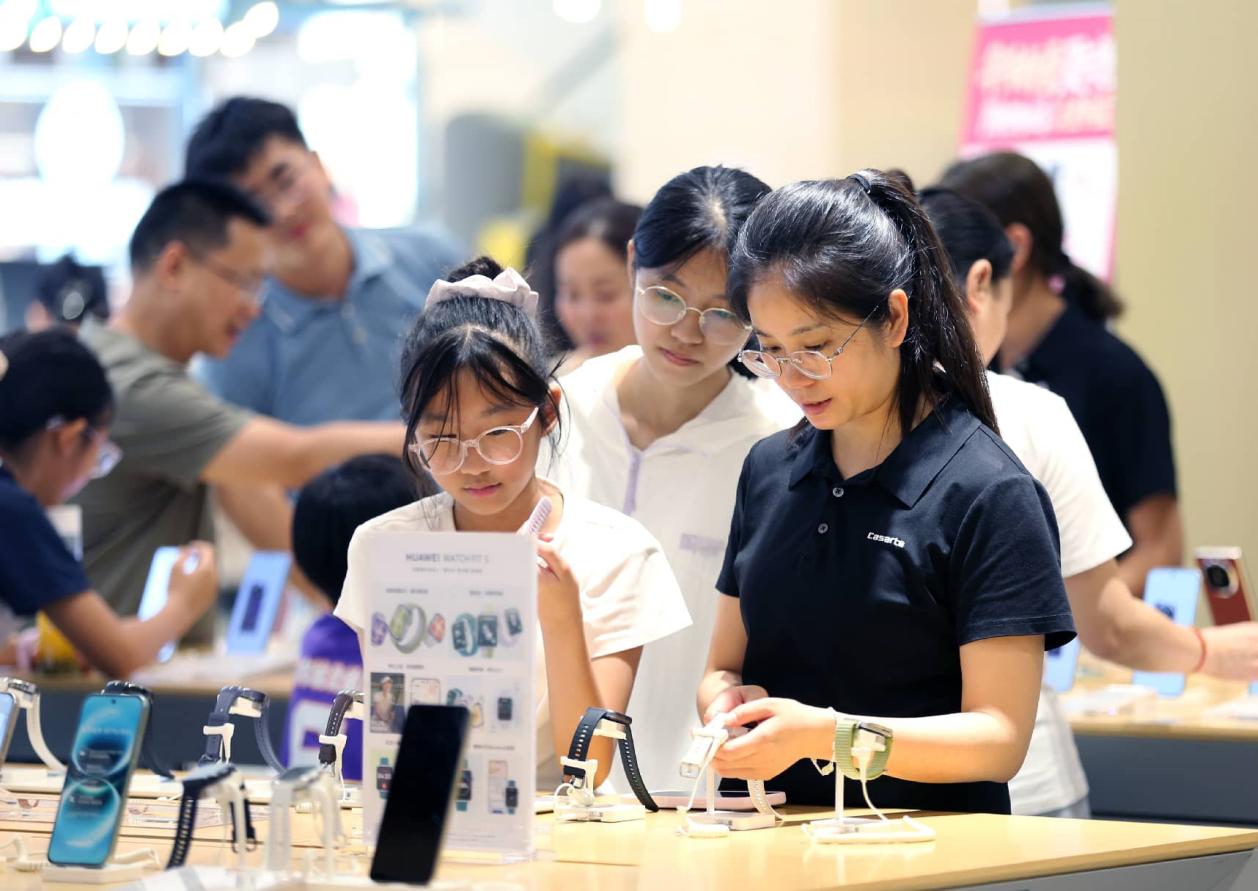
As of June 20, this year's consumer goods trade-in programs had generated more than 1 trillion yuan in sales, benefiting 136 million consumers.
The demand of more than 1.4 billion people for a better life continues to unleash the enormous potential of China's vast consumer market.
Artificial intelligence is empowering industries across the board, while grassroots cultural events such as village football leagues and village gala performances are revitalizing rural communities. New demand is giving rise to new supply, while new supply is creating fresh demand, generating a virtuous cycle that sustains economic dynamism.
Some international business leaders have described China as "the world's toughest gym," where companies that succeed become more competitive globally. Others call China "the most reliable partner." In May, China granted zero-tariff treatment on all tariff lines to the 53 African countries with which it has diplomatic relations. As a result, imports of aquatic products and textile raw materials from Africa recorded double-digit year-on-year growth in May and June.
By pursuing mutually beneficial cooperation and promoting inclusive development, China continues to demonstrate through concrete actions that partnering with China means embracing opportunities; believing in China means being optimistic about tomorrow; and investing in China means investing in the future.
Integration: Connecting innovation with development
This year, a number of Chinese hard-tech companies, including Unitree Robotics, successfully completed domestic listing reviews, while more technology enterprises with core innovations accelerated their entry into the capital market. Investment in physical assets and investment in people are becoming more closely connected, while the innovation, industrial, capital, and talent chains are increasingly integrated.
China also launched the Xiangshan open-source processor system and the Ruyi native operating system, both of which are being jointly maintained and continuously improved by developers worldwide. Since beginning trial operation, the High Energy Photon Source has received more than 1,700 experiment applications from research teams at home and abroad. China is steadily evolving from a technology follower into a global source of innovation.
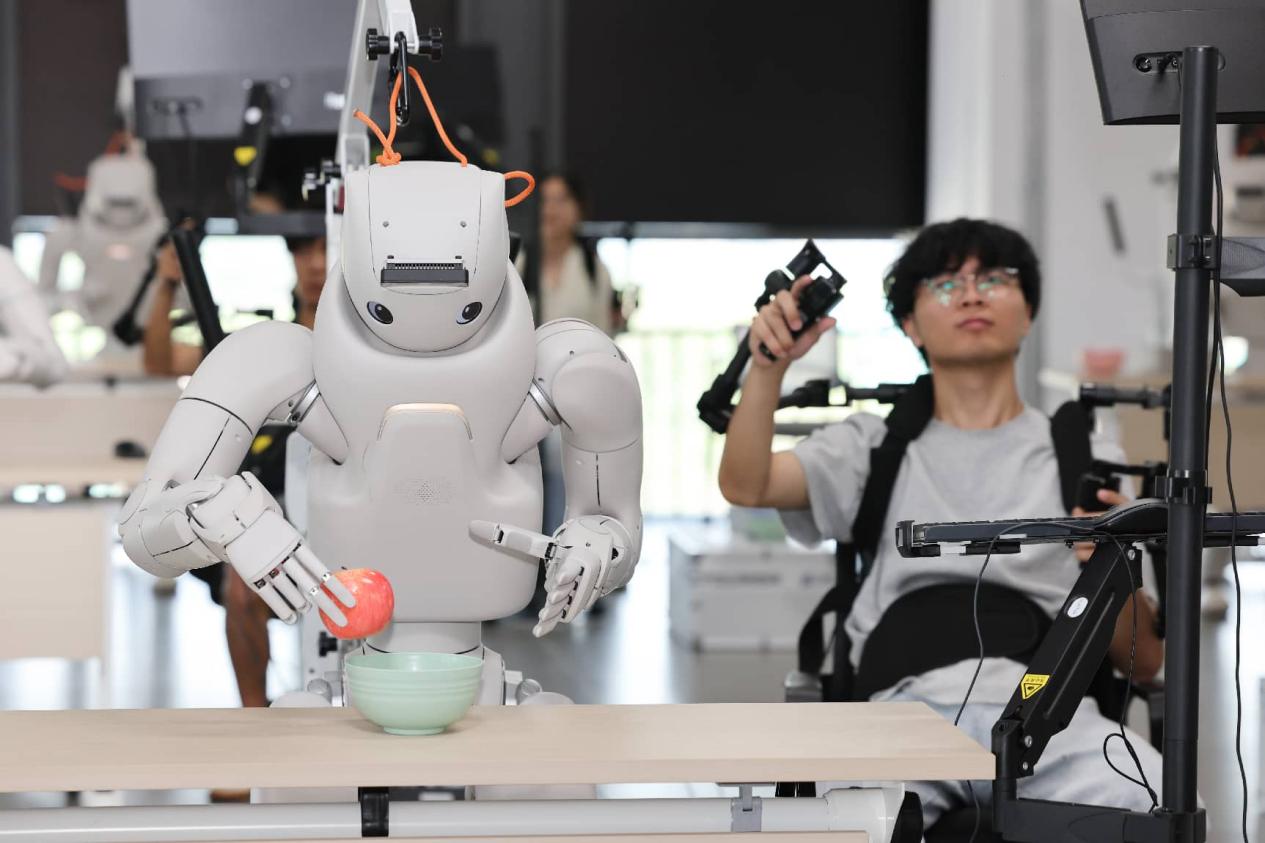
The country's reform agenda continues to emphasize deeper integration across multiple dimensions: promoting closer collaboration among enterprises, universities, research institutes and end users; advancing the integrated development of culture, commerce, tourism, sports and exhibitions; fostering integrated urban-rural development; and accelerating the building of a unified national market.
This focus on integration serves not only as a key to deeper reform and innovation but also opens up broader prospects for high-quality development.
Anchored to its development goals and building on existing momentum, China's economy is moving steadily toward long-term, high-quality development, with a promising future ahead.

評論