











Smart robotics driving rehab breakthroughs
GoChina
2026.05.21 10:16:56 字號:
字號:
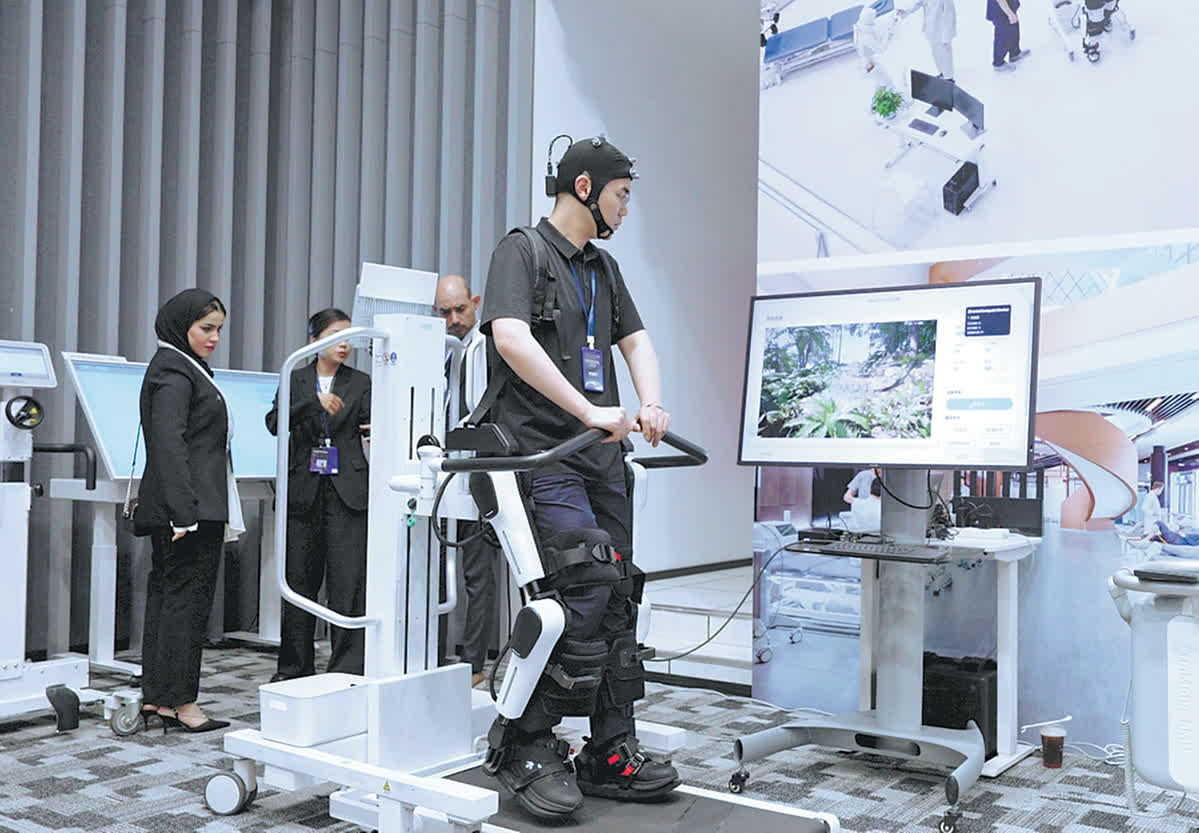
With China firmly at the forefront of artificial intelligence and robotics, the nation's technology companies are targeting opportunities in the global rehabilitation sector as advances in Chinese robotics gain increasing recognition worldwide, experts and business executives said at a recent summit.
The Global Rehabilitation & Assistive Technology Network Summit 2026 convened in Shanghai on May 13, offering a platform to showcase real-world application scenarios of breakthrough technologies. AI and robotics are rapidly advancing to make a difference with great potential in the rehabilitation sector.
Robert Riener, full professor for sensory-motor systems at ETH Zurich, pointed out that the application of such advanced technologies is playing a vital role in areas with large incidences and high numbers of new cases where rehabilitation is needed.
"Now we have large neural networks based on large databases and deep structures with more computational power, which give us huge potential (in the rehab sector). We also have a lot of data about patients that enable us to monitor their physiological data, social behavior, and sleep wake rhythms. Using AI, the data can help predict certain symptoms or diseases," he said.
He especially highlighted strokes, as they show one of the highest numbers of cases each year, making patients suffer from hemiplegia and other problems. Many Chinese robotics are used for stroke therapy and neurorehabilitation, such as rehab robots, exoskeletons and intelligent systems from Chinese robotics company Fourier.
Founded in 2015, Fourier has evolved from exoskeleton robots into a diverse portfolio of humanoid robots and intelligent rehabilitation systems. As an industry-leading proactive AI robotics company dedicated to enriching human life through full-stack robotic technologies, the company's products are serving over 2,000 institutions across 40 countries, including hospitals, communities, manufacturing and everyday environments.
Owen Teoh, managing director of Fourier rehab international division, has been working in the rehabilitation robots sector for over 15 years. He shared that in the past two years, the company has seen rapidly growing demand in its overseas markets including Europe, North America and Southeast Asia. Last year, its sales doubled compared to 2024.
"The popularity of Chinese robotics represents the rise of China's high-end manufacturing. What I have observed is that the overseas market's recognition of Chinese robotics is rapidly growing. The need for rehabilitation robots is clear, and overseas acceptance of Chinese rehabilitation robots is among the highest in the industry," said Teoh.
The development trend is shifting from single products to comprehensive solutions, from passive execution to active embodied intelligence, and from hospital settings to widespread access in community and home environments, he added.
Behind the growing demand for rehab robots, Teoh saw several key drivers, including the continuous demand spurred by global aging and rehabilitation, and the increasing application of robotics in clinical rehabilitation settings. With technological exploration made in 2025 such as embodied intelligence and rehabilitation training integration, the application of embodied intelligence technology in the health and wellness sector began to garner wider attention.
"In the rehab sector, I think that the game changing thing will come when we are able to embody intelligence in the robotics system," said Professor Jose Luis Pons, who leads a research team at Shirley Ryan AbilityLab to apply the most advanced methods for measuring and restoring lower-limb function in diverse patient populations.
He indicated that it doesn't mean building an autonomous intelligent entity or agent to interact with patients or with clinicians. Instead, it requires understanding basic principles of rehabilitation, and then to synthesize those principles by using AI techniques in robotics, so they become more intelligent but have collaborative technologies with a human expert.
"Our robots are often evaluated as a 'warm-hearted' robot. In terms of application and interaction with patients, we are better attached to the needs of both patients and therapists," Teoh said.
He further explained that, for example, when it comes to human-robot interaction, traditional robots tend to rely heavily on repetitive movements, but Fourier's game design and user experience are tailored more closely to actual needs. Additionally, featuring the company's force feedback technologies, the robot can sense the patient's muscle strength and provide corresponding assistance. This is perceived as a more human-like interaction, making it easier for them to use.
"China is among the world's leaders in robotics and its intelligent applications possess a technological foresight that other countries and regions lack … In addition to hospitals and communities, we hope our robotics can reach households in need, to help improve their quality of life," Teoh added.


評論