











China ready to help restore peace, stability in Mideast
Talks: Hormuz remains shared concern
GoChina
2026.05.07 08:39:21 字號:
字號:
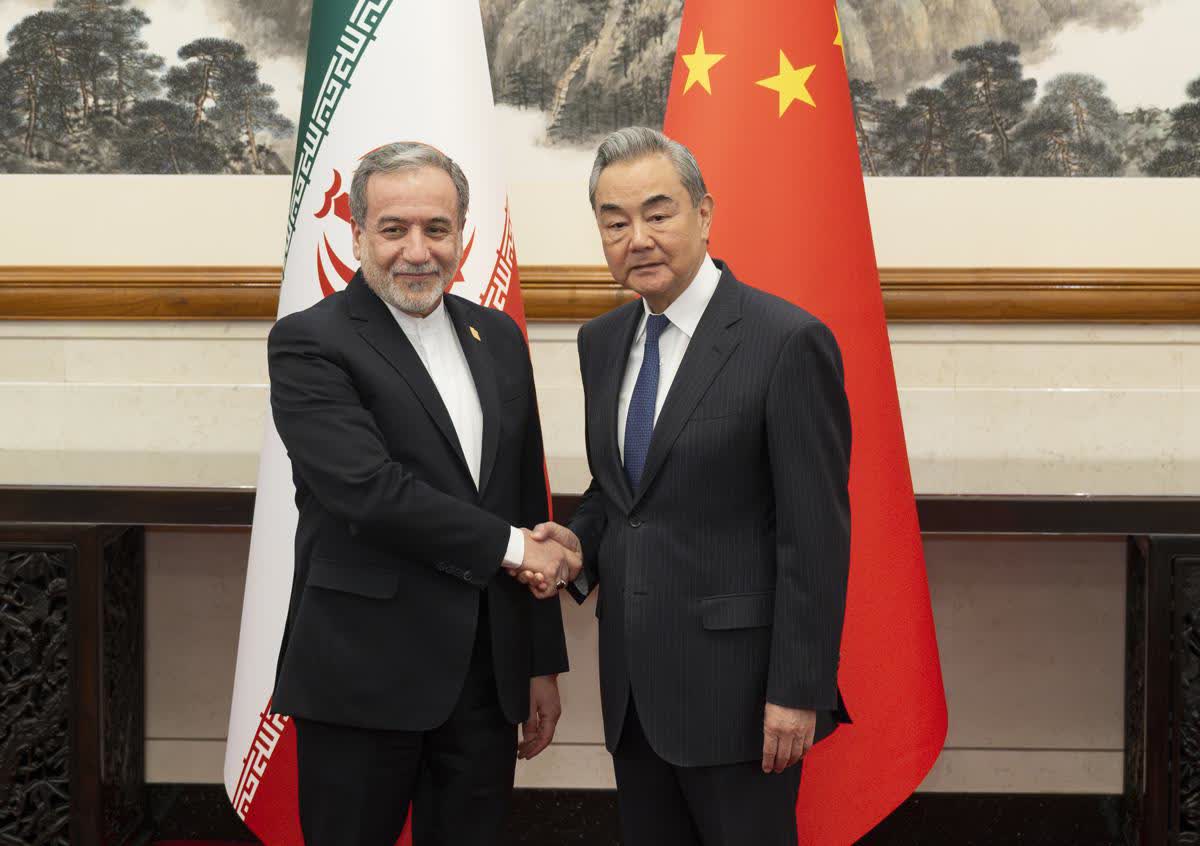
Foreign Minister Wang Yi said on Wednesday that China is ready to help create the conditions for starting peace talks and play a greater role in restoring peace and stability in the Middle East, as the region stands at a critical juncture between war and peace.
Wang made the remarks in Beijing during talks with Iranian Foreign Minister Seyed Abbas Araghchi, whose visit was his first trip to China since the United States and Israel launched attacks on Iran on Feb 28. Before traveling to China, as part of his intensive shuttle diplomacy, Araghchi had visited Pakistan, Oman and Russia in late April.
Since the start of the conflict, Wang and Araghchi have held three phone conversations, maintaining close communication as the situation evolved.
Wang noted that more than two months of fighting has "dealt a severe blow" to regional and global peace and stability.
"China deeply regrets this. A full end to the fighting cannot wait, any resumption of hostilities would be even more inadvisable, and staying committed to negotiations is particularly important," Wang told his Iranian counterpart.
Araghchi briefed Wang on the latest developments in Iran-US negotiations and Iran's considerations in terms of its next steps. He said that Iran will firmly safeguard its national sovereignty and dignity while continuing to build consensus through peaceful negotiations in pursuit of a comprehensive and permanent solution.
Araghchi added that the issue of keeping the Strait of Hormuz open should be properly resolved at an early date.
Iran appreciates China's tireless efforts, which were made in a constructive spirit, to prevent the situation from deteriorating and spilling over, he said, adding that Tehran trusts Beijing and looks forward to China's continued active role in promoting peace and ending hostilities.
Araghchi also voiced hope that China would support the establishment of a new postwar regional architecture capable of coordinating development and security.
Wang told Araghchi that China supports Iran in safeguarding its national sovereignty and security, and appreciates Iran's willingness to seek a political settlement through diplomatic channels.
On the Strait of Hormuz, Wang said that the international community shares a common concern on restoring normal and safe passage through the strait, and China hopes that the parties concerned will respond to global calls as soon as possible.
On the nuclear issue, Wang said that China appreciates Iran's commitment not to develop nuclear weapons, while maintaining that Iran has the legitimate right to the peaceful use of nuclear energy.
China believes that Gulf and Middle Eastern countries should keep their future in their own hands, Wang said. China encourages Iran and more Gulf countries to engage in dialogue and pursue good-neighborly relations, and supports regional countries in building a peace and security architecture based on common participation, shared interests and common development, he added.
Sustained mediation push
Since the fighting started, China has stepped up efforts to promote peace and encourage talks.
In April, President Xi Jinping put forward a four-point proposal on maintaining and promoting peace and stability in the Middle East, calling for peaceful coexistence, respect for national sovereignty, adherence to the international rule of law, and a balanced approach to development and security — a framework that has guided China's diplomatic engagement in the crisis.
Wang has held nearly 30 phone calls with senior officials from relevant parties, including Iran, Israel, Russia and Gulf countries. He spoke last week by phone with US Secretary of State Marco Rubio, and the two sides exchanged views on the Middle East situation.
Niu Xinchun, executive director of the China-Arab Research Institute at Ningxia University, said that the US-Iran ceasefire remains fragile, with the risk of renewed hostilities still present.
He noted that prolonged disruption to the Strait of Hormuz could affect global energy supplies and maritime trade, drive up shipping costs, and increase pressure on the global economy.
Li Zixin, an associate researcher at the China Institute of International Studies, said that Tehran may hope that Beijing can convey necessary messages to Washington through bilateral and multilateral channels and convince Washington to exercise restraint.
China's communication with all key parties gives it a constructive role in preventing the ceasefire from breaking down and steering the crisis back toward dialogue, Li said.


評論