











China's innovation drive a boon to the world
GoChina
2026.04.30 09:20:46 字號:
字號:
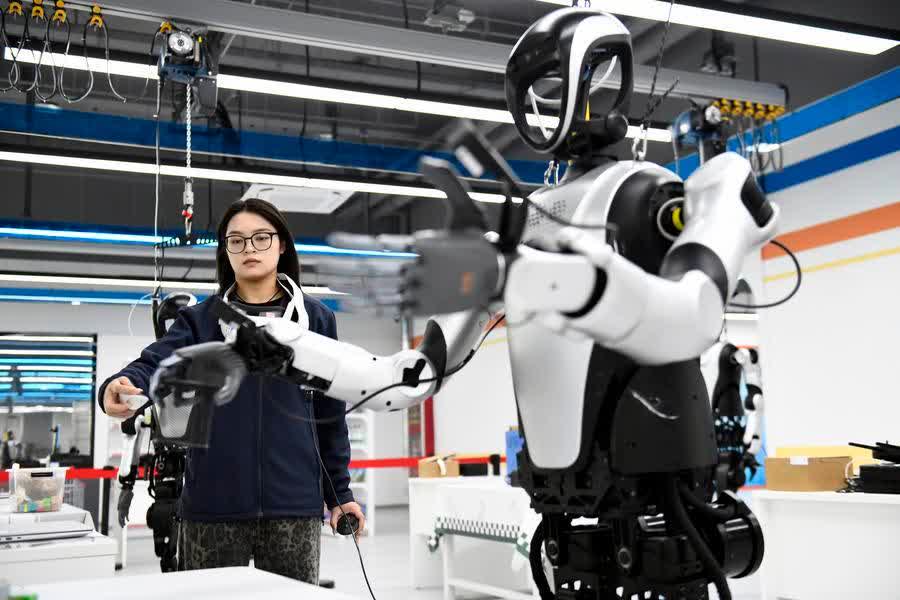
China is strengthening its role as a key driver of global economic growth by promoting high-quality development through sci-tech innovation, with officials and analysts saying the innovation drive is a boon to the world.
Speaking at the China Development Forum 2026 in March, Han Wenxiu, executive deputy director of the Office of the Central Committee for Financial and Economic Affairs, said China's scientific, technological and industrial innovations will have growing global spillover effects and contribute to a more diverse and vibrant world.
China's growing innovation capacity has gained international recognition. For the first time, the World Intellectual Property Organization ranked the country among the global top 10 in its Global Innovation Index 2025. Last year, the country's total research and development (R&D) spending exceeded 3.92 trillion yuan (about 571.4 billion U.S. dollars).
According to analysts, the massive investment is accelerating both incremental and disruptive innovation. "Large-scale R&D expenditure not only supports iterative upgrades in existing technologies, but also creates room for frontier breakthroughs," said Wang Meng, a senior researcher at CIB Research.
In Qingdao, a coastal city in east China's Shandong Province, notable progress has been made in marine biotechnology innovation.
The Bright Moon Seaweed Science and Technology Museum showcases a wide range of seaweed-derived products, including food, cosmetics, medical materials and bio-fertilizers.
One such product is ultra-pure sodium alginate, a key material used in regenerative medicine applications such as cell culture and tissue engineering. The natural polymer materials meet the standards for in vivo implantation to treat conditions such as tumors and heart failure.
Zhang Guofang, chairman of Qingdao Bright Moon Seaweed Group, said years of research had enabled the company to become the world's second producer of implant-grade ultra-pure sodium alginate.
"Innovation across production, equipment and supply chains has improved quality while reducing costs to benefit more people," Zhang said.
Technological innovation is also reshaping agriculture, particularly in seed development.
At the R&D center of Shandong Shouguang Vegetable Seed Industry Group Co., Ltd., scientists use artificial intelligence to accelerate breeding. Data models help predict gene functions and identify desirable crop traits, significantly shortening breeding cycles.
"China is in a period of rapid development in breeding research," said Cheng Lin, director of the center, noting that the country is a global leader in cutting-edge academic output in breeding, which could contribute to global food security.
The company has expanded overseas, developing heat and drought-resistant seeds for the United Arab Emirates (UAE) and establishing a joint vegetable seed breeding and R&D center in Malaysia, contributing to food security and modern agriculture in partner countries.
China's technologies and products are benefiting regions across the world, from the Jakarta-Bandung High-Speed Railway in Indonesia and 5G-A telecommunications networks in the UAE to BeiDou satellite services in over 30 African countries and BYD electric buses in Chile and Colombia.
Beyond exports, China is also promoting sci-tech cooperation.
In its 15th Five-Year Plan, China pledged to promote high-standard sci-tech opening up and cooperation, including broader access to major research infrastructure and programs for scientists worldwide.
By October 2025, China had established sci-tech cooperation ties with more than 160 countries and regions and joined over 200 international organizations and multilateral mechanisms in the field.
Lan Qingxin, a professor at the University of International Business and Economics, said China will continue to promote the global sharing of innovation outcomes with an open collaboration philosophy.
"Innovation results from Chinese laboratories are reaching the global market," Lan said. "This will help promote more inclusive and equitable global sci-tech governance and support global economic growth."


評論