








Celebrating a cultural movement
GoChina
2026.03.26 09:14:36 字號:
字號:
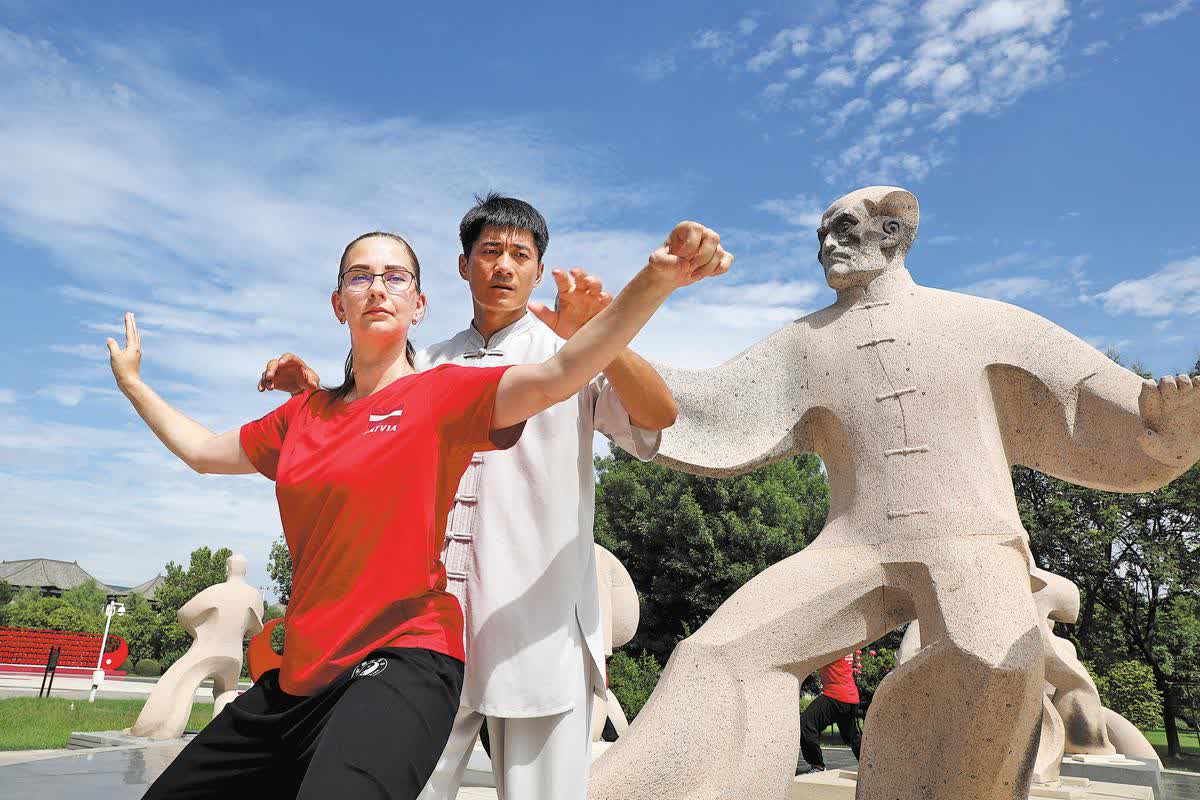
In the shadow of the towering taijiquan museum in Chenjiagou village in Central China's Henan province, countless arms rose slowly like clouds parting, the weight of hundreds of bodies shifted from one leg to the other with the steadiness of water finding its level, and the palms of a multitude of hands pressed forward in controlled grace — all in perfect unison.
The hundreds of taijiquan (tai chi) practitioners were a mix of locals and visitors who had traveled thousands of miles to the birthplace of the martial art for the first UNESCO-designated International Taijiquan Day on Saturday.
The designation has affirmed what practitioners have long known — that taijiquan is more of a cultural treasure than simply an exercise.
The scene in the village is repeated daily in parks, plazas and community centers across the country, as tens of millions begin their day with slow, deliberate taijiquan movements.
According to a report recently released by China's General Administration of Sport, the number of taijiquan practitioners in China is currently around 78.6 million, showing that it is deeply woven into the fabric of Chinese daily life.
Now, on TikTok and Instagram, videos show practitioners from around the world learning training routines, discussing the art's philosophy and documenting their tai chi journeys — the destination of which, in many cases, ends up being Chenjiagou.
Many international visitors arrive seeking tutorship from Chen Bing, a 12th-generation Chen-style master.
For Western learners, taijiquan offers a different way of understanding the body, which shifts the focus from external strength to internal awareness, Chen said.
Chen explains taijiquan to international students with three metaphors — stillness, relaxation and water.
"Imagine a glass of muddy water. Let it sit still for a day. The mud settles. The water becomes clear. That is what stillness does for the mind," he said.
Relaxation, he added, allows qi, or internal energy, to flow freely — improving health, coordination and even explosive power.
Chen said water has three states, and so does taijiquan. Ice is stiffness, water is flow and vapor is qi. "The more you relax, the lighter and more connected you become," he added.
This philosophy traces back to Chenjiagou. In the 17th century, Chen Wangting, a ninth-generation descendant of the Chen family, drew from the ancient Book of Changes, or I Ching, traditional Chinese medicine, and Taoist breathing techniques central to cultivating qi to create the martial art.
Chenjiagou is now home to more than 800 practicing masters and over 40 family-run schools, said Chen Chong, an official of Chenjiagou. The village has also adopted a "taijiquan plus internet" model to carry out cultural exchange programs with more than 30 countries and regions.
Mario Farre, a 64-year-old from France, moved to Henan a few years ago to practice taijiquan. At a competition in the province, he won first and second place in two taijiquan events.
"I have become calmer, more patient and better at understanding others," Farre said.
As Chen Bing put it, Westerners like Farre practice to seek health, but often find something deeper in the process.
Shi Baoyin contributed to this story.


評論