










Hunan welcomes tourists lured by allure of miao silver
GoChina
2026.03.13 09:45:33 字號:
字號:
If you find yourself in a Miao ethnic village in western Hunan province, you will hear the soft, rhythmic jingling of a person's outfit before you see them.
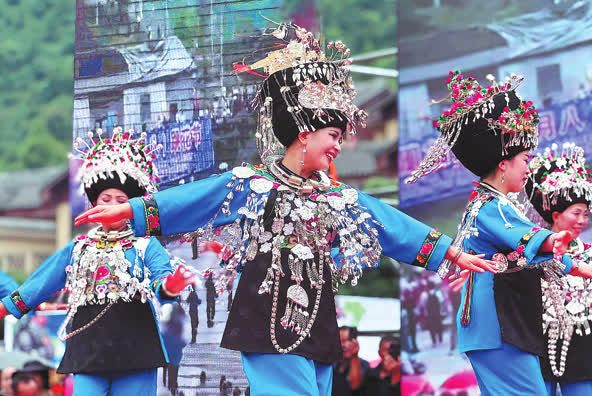
Local Miao women will then appear, dressed in brilliant festival attire with silver ornaments rattling against their embroidered fabrics. Sunlight glints off their glittering headpieces as they walk, with layers of ornate necklaces swaying back and forth, each step a soft, rhythmic announcement of their arrival.
An increasing number of outsiders are discovering the allure of these silver adornments. They are captivated by the intricate craftsmanship and ethnic vibrancy of the pieces, which transcend cultural boundaries.
That pull seems strongest in Debang village of Fenghuang county in Hunan's Xiangxi Tujia and Miao autonomous prefecture.
Known as the region's "silversmith village" and recognized by national and provincial cultural and tourism authorities as a living heritage site, Debang has seen generations of artisans shaping silver to the rhythmic clink of hammers.
"Every silversmith in Debang could expect to sell 10 to 12 complete bridal sets annually," said Ma Liming, who runs a popular workshop featuring an array of sparkling silverware in the village.
For a Miao family, a bridal set can weigh up to eight kilograms and cost up to 200,000 yuan ($28,000).
It serves as a family treasure to be worn and an heirloom to be passed down, Ma explained.
Today, however, a different clientele keeps the hammers tapping.
Millions of tourists now wander through Fenghuang's silver shops each year, snapping up the shimmering wares as souvenirs.
Ma said he has observed that modern consumers now ask first about the cultural meaning behind a piece's patterns, which can include auspicious Chinese motifs such as the phoenix, fish and peony.
A phoenix pin catching the light symbolizes beauty and good fortune, while a fish pendant invokes the wish for abundance. Even a necklace of a number of delicate links carries a blessing for a long life.
The impulse to embed meaning into metal runs deep. Legend has it that the ancestors of the Miao people embarked on a long and arduous journey, crossing the Yellow and Yangtze rivers as they migrated from the north to the south and then westward, eventually settling in the Wuling Mountains, which span the provinces of Hubei, Hunan and Guizhou, as well as Chongqing municipality.
Along the way, they converted whatever valuables they possessed into silver, considered portable wealth that could travel with them, adorn their bodies, and carry their stories forward.
Though the Miao people settled long ago, this tradition endures. Accumulated wealth is still worn on the body, not merely as an aesthetic choice, but also as a way for each generation to honor those who came before.
For travelers passing through Fenghuang, purchasing Miao silver is more than buying a souvenir. It is an entry point into a grand cultural story.
Wan Lanfang, a Miao ethnic silversmith born and raised in Shibing county, which is part of Guizhou's Qiandongnan Miao and Dong autonomous prefecture, has built her business around the appeal of ethnic items to modern shoppers.
On market days, her stall draws crowds of people who linger over trays of gleaming earrings and run their fingers across etched butterflies and simplified spiral patterns before making their choice.
"The traditional pieces enjoy brisk sales," Wan observed.
Her ingeniously crafted, simpler and lighter silverware bearing traditional Miao motifs, such as the butterfly and prickly pear flower, has been a hit among young consumers who wear it as part of their everyday outfits.
Her best-sellers are earrings, followed by rings, bracelets and brooches.
"Most of my buyers are from outside the province. They're drawn to the ethnic character of the work," she said.
Wan, though, has found that a growing number of international customers are specifically drawn to the heavy, elaborate and unabashedly traditional pieces.
"They're interested in Miao culture itself and highly appreciate the craftsmanship and intricacy," she said. "They might consider it a light yet worthy investment to commemorate the trip and the story it carries."


評論