











The National Natural Science Foundation of China and scholars meet at Lingnan University to discuss innovative approaches to tackling climate change

 嶺南大學
嶺南大學
2025.04.29 14:38:07
 字號:
字號:
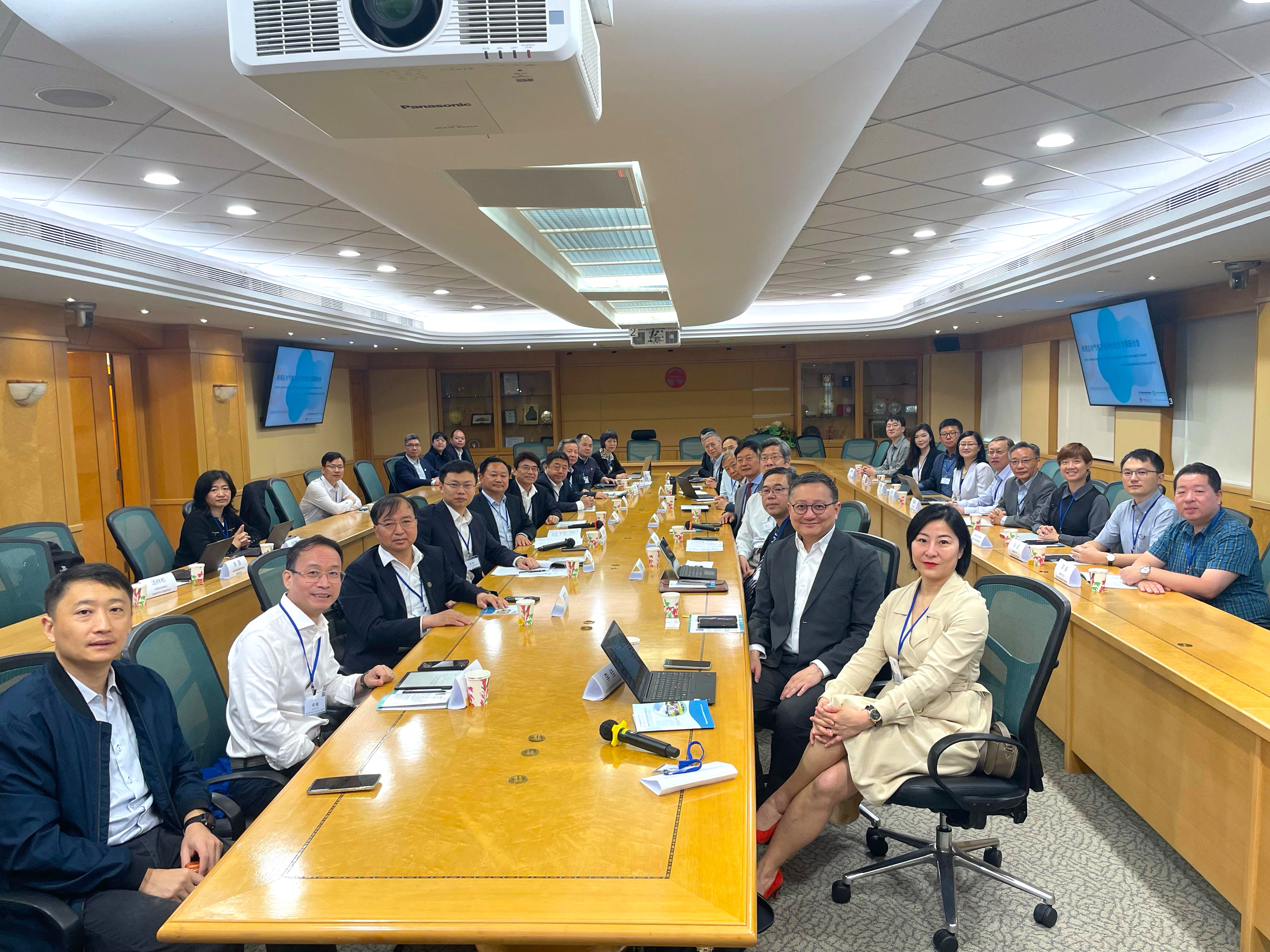
The Expert Report on the Fifth National Assessment Report on Climate Change Hong Kong and Macao Special Report, organised by the Administrative Center for China’s Agenda 21 (ACCA21) and co-hosted by Lingnan University, was held on the Lingnan campus on 26 April. Attendees included Vice President Lan Yujie of the National Natural Science Foundation of China (NSFC); Deputy Director Zhang Yongtao of ACCA21; Deputy Director Yan Jinding of the National High-tech R&D of the NSFC; President and Wai Kee Kau Chair Professor of Data Science of Lingnan University Prof S. Joe Qin; Vice-President & Pro-Vice-Chancellor (Academic Development) of The University of Hong Kong (HKU) Prof Gong Peng, Associate Provost (Teaching and Learning) of The Hong Kong University of Science and Technology (HKUST) Prof Jimmy Fung, as well as representatives from relevant departments and experts from Mainland China, Hong Kong, and Macao.
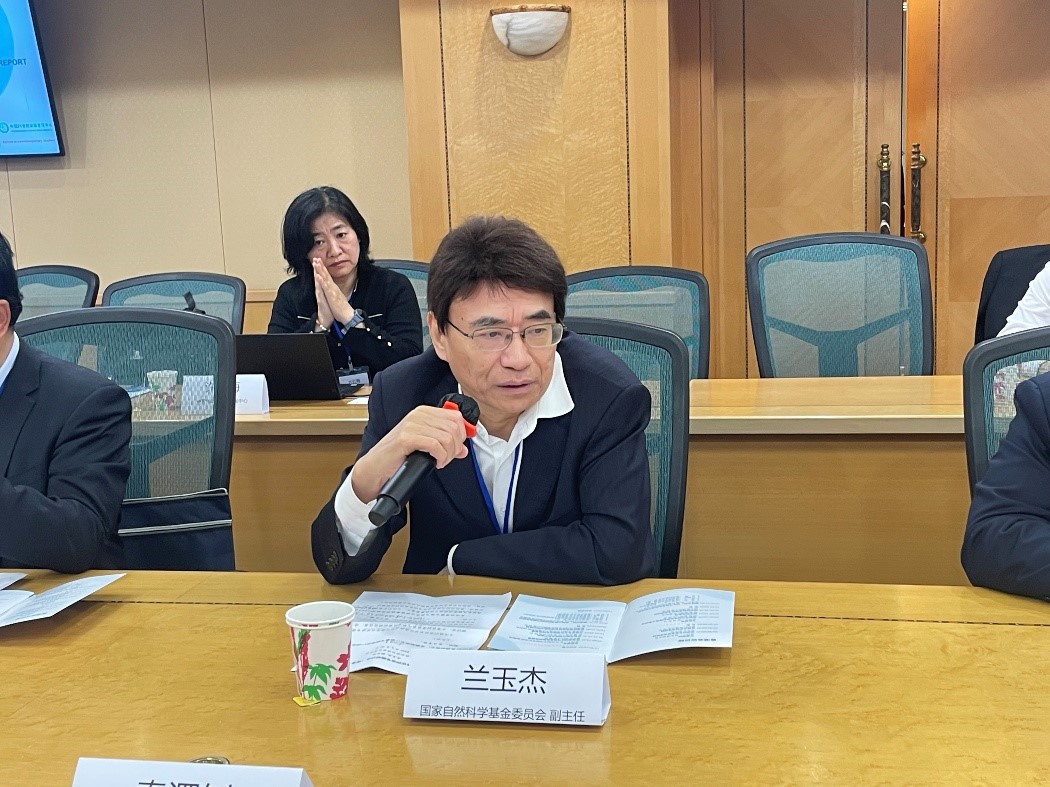
In his opening speech, Vice President Lan Yujie of NSFC noted that, since 2002, China has compiled and released four editions of the National Assessment Report on Climate Change. He emphasised that climate change scientific assessment has become a cyclical and institutionalised policy, supporting major national strategic decisions, providing a solid scientific foundation for China’s climate change policies, guiding technological innovation, and serving as a crucial support for active participation in global climate governance.
Vice President Lan emphasised that "the special study on climate change response in Hong Kong and Macao carries a unique mission. Therefore, the Fifth National Assessment Report on Climate Change will continue to include a dedicated section on Hong Kong and Macao, showcasing their achievements and distinctive approaches in addressing climate change, and offering an example of regional collaboration for the nation. This seminar aims to foster in-depth exchanges and cooperation among scientists from the Mainland, Hong Kong, and Macao, encouraging the sharing of ideas and experiences to promote coordinated climate governance and explore innovative solutions."
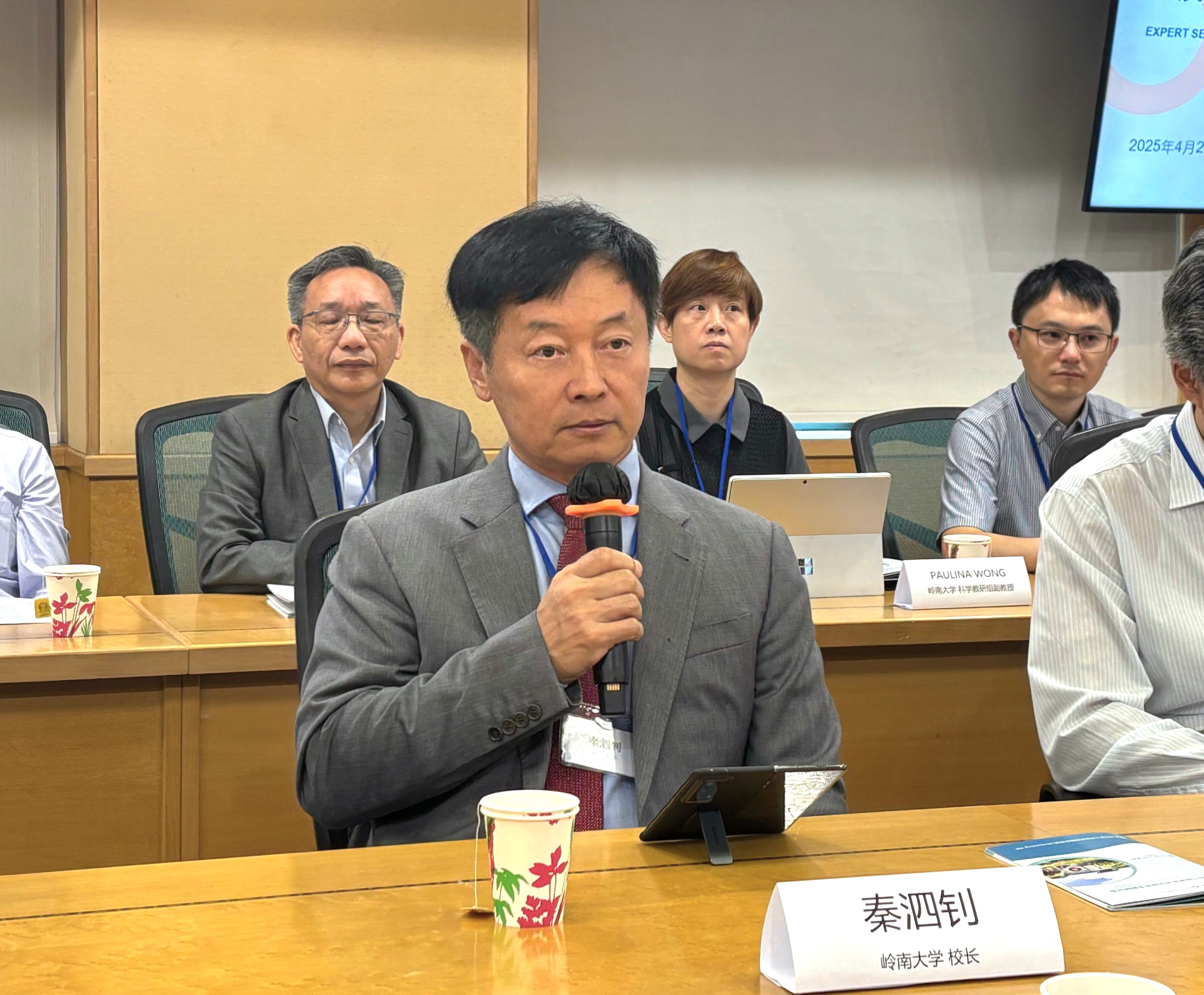
President S. Joe Qin said the University was honoured to host this important discussion. He highlighted Lingnan’s commitment to advancing sustainable development and climate action through academic programmes in green finance, ESG investment, and energy transition, equipping students with expertise in low-carbon transformation while driving research and technological innovation to support regional climate governance.
"As an academic pioneer in sustainability and climate change, Lingnan University feels a strong sense of social responsibility. We cultivate students' professional capabilities in low-carbon transition through courses on green finance, ESG investment, and energy transformation, while promoting the application of research outcomes and technological innovations to bolster regional climate governance and inject practical momentum into societal low-carbon development," President Qin said.
The Fifth National Assessment Report on Climate Change is jointly led by the Ministry of Science and Technology of China, the China Meteorological Administration, the Chinese Academy of Sciences, the Chinese Academy of Engineering, and the NSFC, and coordinated by 11 ministries with ACCA21 as the organising office. The seminar focused on the latest climate research, clarifying the scope and priorities of the Hong Kong and Macao special report as well as strengthening collaboration among experts to explore optimal solutions.
During the keynote presentation session, multiple experts and scholars shared their research findings. Prof Shao Min from Jinan University systematically analysed the facts, impacts, risks, and adaptation strategies of climate change in Hong Kong and Macao based on the key contents of the Fourth National Assessment Report on Climate Change (Hong Kong and Macao Special Report), providing scientific guidance for the regions to address these challenges. Prof Gong Peng, Vice-President of HKU, focused on achieving carbon neutrality in Hong Kong's power sector, proposing several new solutions to support the transition toward a carbon-neutral electricity system.
Prof Chen Wenying from Tsinghua University’s Institute of Energy, Environment and Economy spoke about the synergistic effects of energy transition in carbon neutrality, presenting a comprehensive assessment of low-carbon energy transformation through multi-scale spatio-temporal modelling. Her research offers a firm foundation for formulating scientifically sound carbon-neutral pathways.
Prof Dong Wenjie from Sun Yat-sen University provided an analysis of current climate change trends in the Greater Bay Area, proposing urban climate system solutions in four main areas: extreme weather prediction, disaster prevention and mitigation, energy optimisation, and micro-scale urban environmental regulation.
Prof Chen Xi, Dean of the School of Interdisciplinary Studies and Chair Professor of Interdisciplinary Studies at Lingnan University, discussed advances in decentralised carbon-neutral technologies based on the "Carbon Balance" theory, highlighting practical applications and demonstration outcomes.
Researcher Chen Weiqiang from the Institute of Urban Environment, Chinese Academy of Sciences, examined the submersion risks of climate change faced by coastal cities, using a high-resolution 3D spatio-temporal urban model combined with economic assessments to identify high-risk areas.
Mr Kenneth Leung, Director of the HKUST Sustainability/Net-Zero Office, outlined Hong Kong’s emission reduction measures and achievements in the electricity, road transport, and maritime sectors.
The roundtable discussion on artificial intelligence (AI) applications in climate research featured intense dialogues among experts, including Prof Xin Yao, Lingnan University’s Vice-President (Research and Innovation) and Tong Tin Sun Chair Professor of Machine Learning, Prof Yan Jinyue from The Hong Kong Polytechnic University; and Prof Chen Fei and Prof Su Hui from the HKUST. They explored cutting-edge AI technologies in climate science, fresh approaches for early warning systems, AI-driven typhoon prediction models, and optimisation algorithms for energy system decarbonisation, which provided forward-looking and actionable insights into interdisciplinary integration and technology implementation.
Researcher Wu Shaohong from the Institute of Geographical Sciences and Natural Resources Research (CAS), Prof Song Chunshan, Dean of The Chinese University of Hong Kong (CUHK), and Associate Professor Li Fung, Associate Professor Shang Jin from the City University of Hong Kong, and Associate Professor Lyu Haitao from the Hong Kong Baptist University also engaged in detailed discussions on topics such as building sustainable CO₂ supply chains for carbon neutrality, the necessity of climate adaptation, novel carbon capture adsorption-separation systems, and interdisciplinary health-climate science applications. Integrating frontier research with regional development needs, they conducted analyses from technological, policy, and industrial collaboration perspectives, suggesting useful new directions for the Greater Bay Area in tackling climate issues and establishing a green, low-carbon development model.
Deputy Director Zhang Yongtao concluded that as chief participants in global climate governance and core engines of the Greater Bay Area, Hong Kong and Macao play a pivotal role in climate change assessment research, critical to implementing the nation's "dual carbon" strategy and providing scientific support for regional climate governance. He stressed that the special reports on Hong Kong and Macao must define clear objectives and positioning, focus on central sectors and unique characteristics, construct a logical and coherent framework, fully integrate the research strengths of the Mainland, Hong Kong, and Macao, foster cross-regional and cross-disciplinary synergy, advance the compilation process in an orderly manner, and ensure that high-quality outcomes serve climate governance practices effectively.
This seminar brought together the latest insights in climate change assessment in extensive keynote presentations and dynamic roundtable discussions, and provided critical research support and practical insights for the Fifth National Assessment Report on Climate Change (Hong Kong and Macao Special Report). The ACCA21 will continue to sponsor high-level academic exchange platforms, integrate cross-regional and interdisciplinary research strengths, promote the seamless integration of assessment outcomes into the global climate governance system, and maintain China’s leading role in international climate cooperation - contributing Chinese solutions to build a fair, logical, and win-win global climate governance framework.


評論